Dry-ageing on the bone, and why it takes 30 days
How dry-ageing works: the enzymes that tenderise the meat, the 20% weight loss, the role of the bone and the difference between 30 and 40 days.
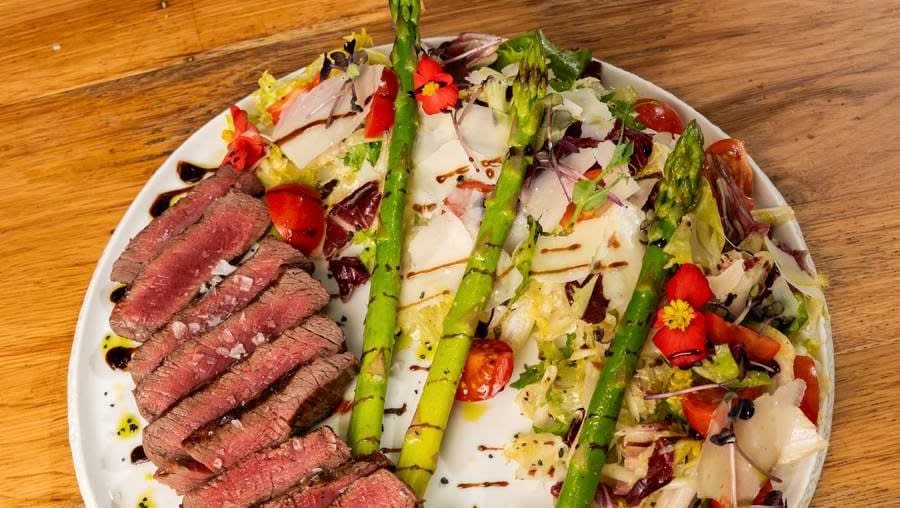
Dry-ageing is not a way of preserving meat, as many people believe. It is quite the opposite: a controlled breakdown. You let the meat spoil, but only as far as you need and only in the direction you want.
The cut hangs or rests on a rack at 1–3 degrees Celsius, with humidity held at around 80% and air circulating constantly. Without airflow, unwanted mould forms. With too much, the surface dries too quickly and seals, and the process stops.
What the enzymes do
Muscle contains enzymes that, after slaughter, begin to break the bonds between the collagen fibres. They are called calpains and cathepsins. They work on their own, with nothing added — all they need is time and the right temperature.
The result is twofold. The meat becomes more tender, because the structure that kept it firm falls apart. And it gains flavour, because proteins break down into amino acids while the fat slowly oxidises. This is where the notes of hazelnut, aged cheese and butter come from — the ones you taste in a well-aged cut and never in a fresh one.
At 30 days, the meat has lost almost a fifth of its weight. What remains is more concentrated in flavour than what went in.
How much is lost
This is also why an aged cut costs more than a fresh one. Part of the meat that goes into the ageing room never comes out.
- Evaporation Between 15 and 20% of the weight is lost as water, in the first three weeks.
- Crust The outer layer dries and hardens. It is trimmed and discarded before portioning — another 5–10%.
- Total From a 10-kilogram rib, on average 7 kilograms remain that can be sold.
In other words, you also pay for the meat that has evaporated. It is a real cost, not an added margin.
Why the bone matters
We age on the bone, not boned-out cuts. The bone shields the muscle on one side, which means less exposed surface and less crust to trim at the end. The fat around the bone renders slowly during ageing and feeds the meat beside it.
That is why our Tomahawk and T-Bone come with the whole bone. It is not an aesthetic choice, although it does look good on the plate.
Thirty days or forty
There is no magic number. At 21 days the meat is already tender, but the flavour is only beginning to take shape. At 30 days you have the balance most people are after: tender, clearly flavoured, yet still recognisably beef.
Beyond 40 days, the aged-cheese notes take over. Some adore them, others cannot bear them. That is why we keep two lines: Black Angus at 30 days, for balance, and Creekstone Farms at 40 days, for those who want more character.
Beyond 60 days you enter niche territory. The meat turns almost funky, and the weight loss makes the price hard to justify for a restaurant serving every day.
How to tell it has been done properly
When cut, a well-aged piece is a deep red, almost cherry, not bright pink. The fat is white to ivory, not yellow. It smells of nuts and butter, never sour.
On the grill it behaves differently: it browns faster, because there is less water at the surface, and stays juicy even if you take it slightly past medium rare.