Beef
aged on the bone.

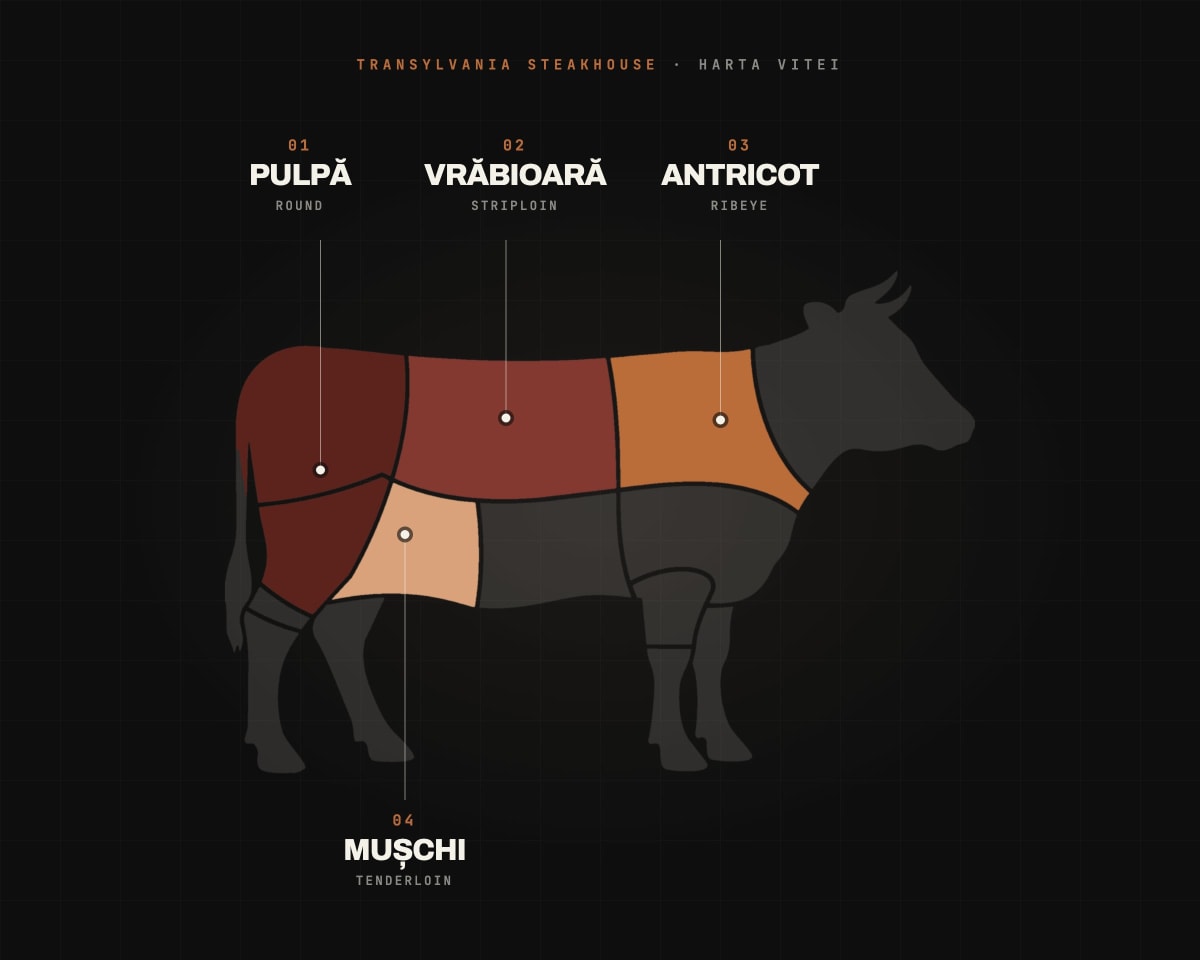
The map of beef cuts
Tap a zone on the drawing to see which cuts come from it. The rib gives Tomahawk and Ribeye, the sirloin gives T-Bone and Fiorentina, the tenderloin gives Filet Mignon and Chateaubriand. For each one we show the breed, how many days it aged and the price per 100 grams.
Menu
Every dish lists its weight, allergens and nutrition facts.
Book online
Monday – Sunday · 10:00 – 22:00
For parties larger than 10, please call us.
Book your
table now.
The Butcher Shop
The same cuts we serve at the table, by the kilo.
Gallery
We have nothing hidden in the kitchen. The meat is weighed at your table, cut in front of you and rested on wood before serving. What you see here is an ordinary evening.
JournalJournal
We write about what is worth knowing before you order: how beef ages on the bone, where each cut comes from and which wine goes with a steak.
- 01AgeingDry-ageing on the bone, and why it takes 30 days
- 02CutsA map of beef: where every cut comes from
- 03TechniqueSteak doneness explained, from rare to well done
- 04OriginWagyu A5: what the grade means and how to eat it

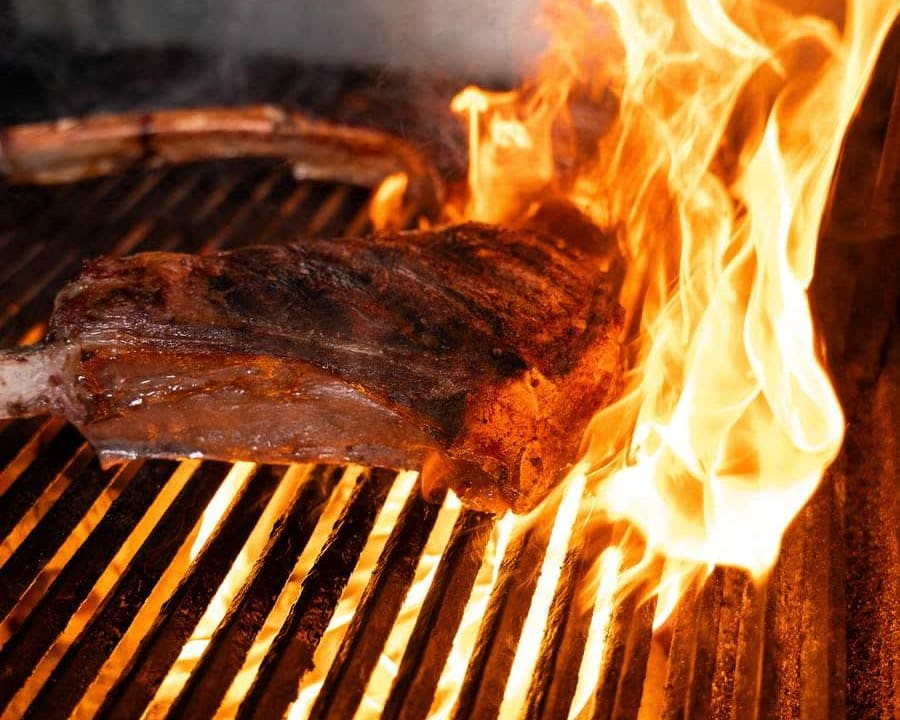
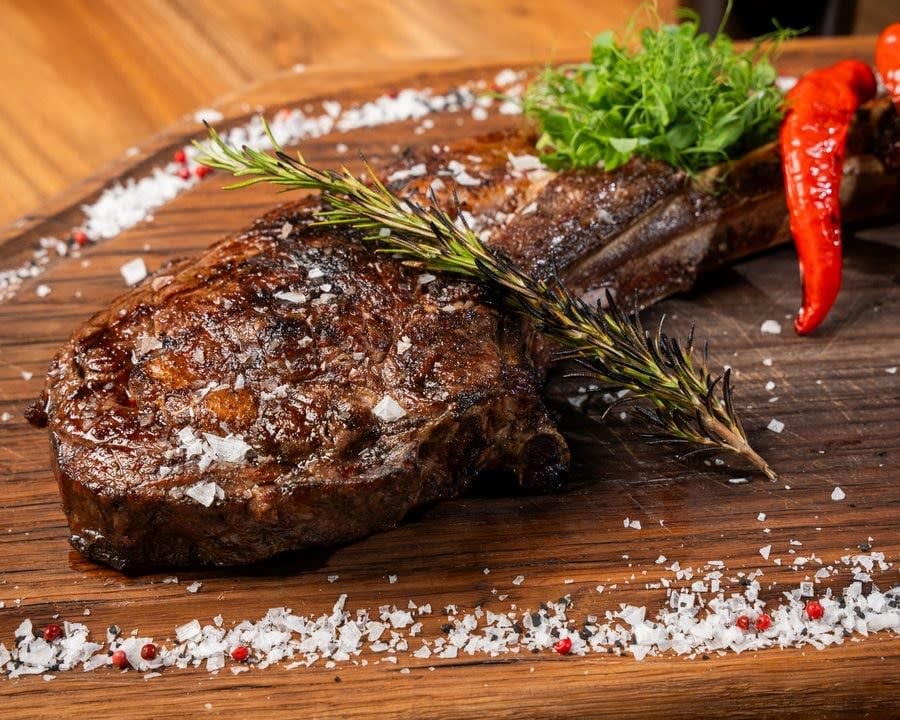
How dry-ageing works: the enzymes that tenderise the meat, the 20% weight loss, the role of the bone and the difference between 30 and 40 days.
Read the articleLocation
and hours
Our own parking in front. Restaurant and butcher shop share the same building.
Cluj-Napoca, județul ClujThe map is Google’s and sets its own cookies.
Cluj-Napoca, județul Cluj
Frequently
asked
What people ask us most, before they come.
Booking takes a few seconds on this site, under Online bookings: pick the day, the time and how many of you there are, and we confirm. For groups larger than ten, call us directly — we arrange those separately.
At 119 Constantin Brâncuși Street, Cluj-Napoca. We have our own parking in front of the restaurant, and the butcher shop is in the same building.
Because beef aged on the bone is cut into pieces that are never identical. The price is per 100 g, and the piece is weighed in front of you before it is cooked. The menu also shows the weight range of each cut, with an estimated price per piece.
Every cut has its range written in the menu — 600 g – 1.3 kg, for instance, bone-in. Pieces above a kilo are usually shared between two. If you are not sure, ask your waiter: he can see the pieces in the display.
The meat rests in a room with controlled temperature and humidity, where it loses water and changes texture and taste. Here, Angus ages 30 days, Creekstone 40, while Wagyu A5 arrives ready. We wrote about it at length on the blog.
Tell your waiter how you like it: rare (red inside), medium rare (pinkish-red and juicy), medium (pink) or well done (cooked through). For aged beef we recommend medium rare, which keeps its flavour and tenderness best. Thick cuts, like the Tomahawk, rest for a few minutes before they reach your table.
Every dish lists its allergens in the menu on this site, each with its own sign. At the top of the menu you can filter out dishes containing a given allergen, so you only see what you can eat. Tell your waiter as well, so he can check with the kitchen.
Yes, at the butcher shop in the same building: the same Angus, Creekstone, Wagyu and lamb cuts sold by the kilo, plus house-made products and cheeses. The full list and the shop's hours are on this site.
Yes, some of our wines are served by the glass, not only by the bottle. In the drinks menu those wines show two prices: one next to the bottle sign, one next to the glass sign.